Blockchain Technology's Influence on Transaction Transparency in Peer-to-Peer Casino Environments
Wendy Hoffmann · Aug 23, 2026

Blockchain Technology's Influence on Transaction Transparency in Peer-to-Peer Casino Environments
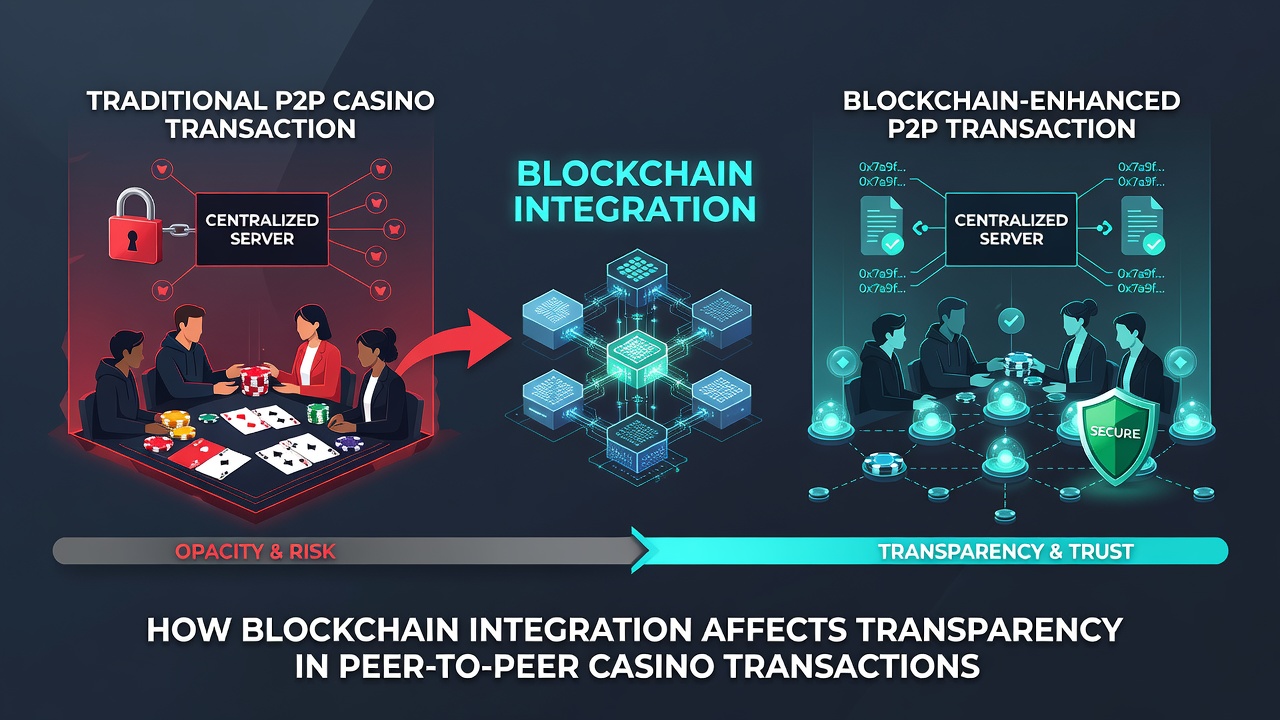
Peer-to-peer casino transactions rely on direct exchanges between players rather than centralized house operations, and blockchain integration introduces distributed ledgers that record each transfer across multiple nodes. These records remain accessible for verification while remaining resistant to alteration once confirmed, which shifts how participants confirm the movement of funds without relying solely on operator assurances. Data from various industry reports indicates that such systems log timestamps, wallet addresses, and amounts in a chronological chain that anyone with access can audit independently.
Core Mechanisms Driving Visibility
Smart contracts execute predefined rules automatically when conditions match, eliminating manual intervention in many payout scenarios, and this automation leaves behind immutable trails that observers can trace back through prior blocks. Public blockchains expose these details to network participants, whereas permissioned variants restrict access to authorized parties yet still maintain the same tamper-evident properties. Research from academic institutions shows that cryptographic hashing links each new entry to the previous one, creating a sequence where discrepancies surface quickly during cross-checks.
Wallet addresses function as pseudonymous identifiers in these setups, allowing transaction histories to link together without revealing real-world identities unless additional data connects them. Observers note that this structure supports verification of fairness in games that incorporate provably random elements, since seed values and outcomes appear on the chain for post-session review. Figures from technology audits reveal reduced instances of disputed transfers when both parties reference the same public record instead of private logs.
Implementation Patterns Across Platforms
Operators adopting these tools typically integrate them alongside existing payment rails, and several platforms began testing full on-chain settlements during 2025 before expanding in subsequent months. One study from a European research consortium found that platforms using hybrid models combined off-chain speed with on-chain settlement for final confirmation, resulting in clearer audit trails for regulators monitoring cross-border flows. Those who've examined adoption rates point to increased use of layer-two scaling solutions that batch multiple transactions while preserving the ability to verify individual entries later.
August 2026 saw several North American platforms publish updated transparency reports that included on-chain metrics alongside traditional statistics, highlighting how block explorers now serve as supplementary oversight tools. Government agencies in regions outside the UK, such as certain Australian state authorities, have referenced similar data when evaluating licensing criteria for technology-forward operators. Industry organizations tracking these trends report that transaction volumes processed through blockchain rails grew measurably in markets where regulators accept distributed verification as a compliance aid.
Verification Processes and Participant Access
Players gain the ability to query transaction histories directly through public explorers or platform-provided dashboards, and this direct access reduces dependence on customer support responses for basic confirmation. Cryptographic proofs allow anyone to check that a specific game round drew from the claimed random source without needing to trust the operator's internal generator. Reports from research papers issued by universities in Canada document how these proofs integrate with existing random number generators to produce verifiable results that match on-chain commitments.
Dispute resolution changes when all parties reference the same ledger entries, since timestamps and sequence data provide objective reference points rather than competing narratives. Trade groups representing technology providers have noted that platforms incorporating these features often publish their contract addresses, enabling external analysts to monitor aggregate activity levels without accessing individual user details. This pattern appears across multiple jurisdictions where data protection rules coexist with requirements for financial transparency.
Challenges in Maintaining Consistent Records
Scalability constraints on certain base-layer networks still affect confirmation times during peak activity, prompting developers to explore alternative consensus methods that preserve verification capabilities while increasing throughput. Privacy regulations in various regions require careful handling of address linkage, and some implementations add zero-knowledge elements that confirm transaction validity without exposing full details. Evidence from technical evaluations indicates that these additions maintain core transparency benefits while addressing specific compliance needs.
Interoperability between different blockchain protocols remains an ongoing focus for developers, since players often hold assets across multiple networks. Standards bodies and industry associations have begun outlining frameworks that support consistent audit formats regardless of the underlying ledger. Data indicates that platforms addressing these compatibility issues experience smoother integration with existing compliance reporting systems used by oversight entities.
Conclusion
Blockchain integration supplies peer-to-peer casino transactions with verifiable, distributed records that participants and external parties can examine independently. The combination of immutable ledgers, automated execution through smart contracts, and accessible verification tools creates structures where transaction details persist beyond any single operator's control. Current implementations continue to evolve alongside regulatory expectations in multiple regions, with ongoing work addressing scalability, privacy, and cross-network compatibility. These developments provide concrete mechanisms for confirming fund movements and game outcomes while operating within established legal frameworks.