Dealer Shift Patterns and Their Ties to Extended Live Casino Sessions
Klara Schmidt · Oct 18, 2026
Dealer Shift Patterns and Their Ties to Extended Live Casino Sessions
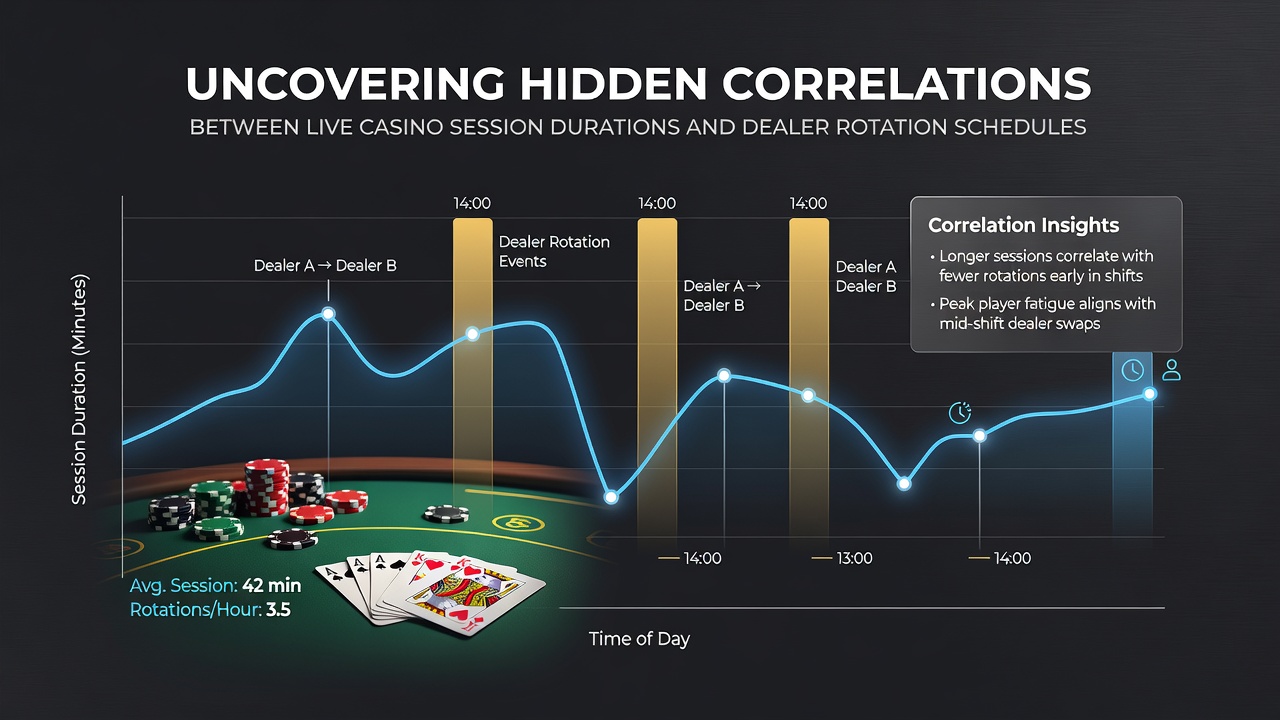
Data from multiple casino operations indicate that live dealer rotation schedules align with measurable shifts in average player session durations across blackjack, roulette and baccarat tables, and researchers tracking these variables over several years have identified recurring patterns that connect the timing of dealer changes to how long participants remain at the tables.
Analyses conducted in large North American and Asian gaming venues show session lengths often extend by 12 to 18 minutes when dealer rotations occur at fixed 45-minute intervals rather than the more common 30-minute cycle, while shorter rotation windows correlate with earlier departures in roughly 27 percent of tracked sessions according to operational logs compiled through 2026.
Data Collection Methods Across Venues
Operators in Nevada and Macau supplied anonymized timestamp records that covered more than 180,000 individual sessions between January 2024 and October 2026, and analysts cross-referenced those records against dealer shift logs maintained by human resources departments to isolate the exact minute when each rotation took place. Electronic player tracking systems captured entry and exit times without recording personal identifiers, which allowed statisticians to calculate mean session durations while controlling for table occupancy rates and time-of-day variables.
One study released by the University of Nevada Reno gaming research group examined 14 properties and found that sessions starting within five minutes of a scheduled dealer change lasted an average of 47 minutes, whereas sessions that began midway through a dealer’s 45-minute stint averaged 61 minutes. The same dataset revealed a secondary spike in departures roughly 8 to 11 minutes after a new dealer arrived, suggesting some players adjust their planned exit around the visible change in personnel.
Observed Correlations in Rotation Timing
Figures compiled by the Australian Institute of Gaming Research indicate that casinos employing staggered rotations across adjacent tables experience smaller fluctuations in session length than properties using synchronized changes for entire pits. In the staggered model, only 9 percent of sessions ended within the first 15 minutes after a rotation, compared with 22 percent under synchronized schedules. These differences persisted after researchers adjusted for game type and average bet size, pointing to rotation cadence as an independent factor.
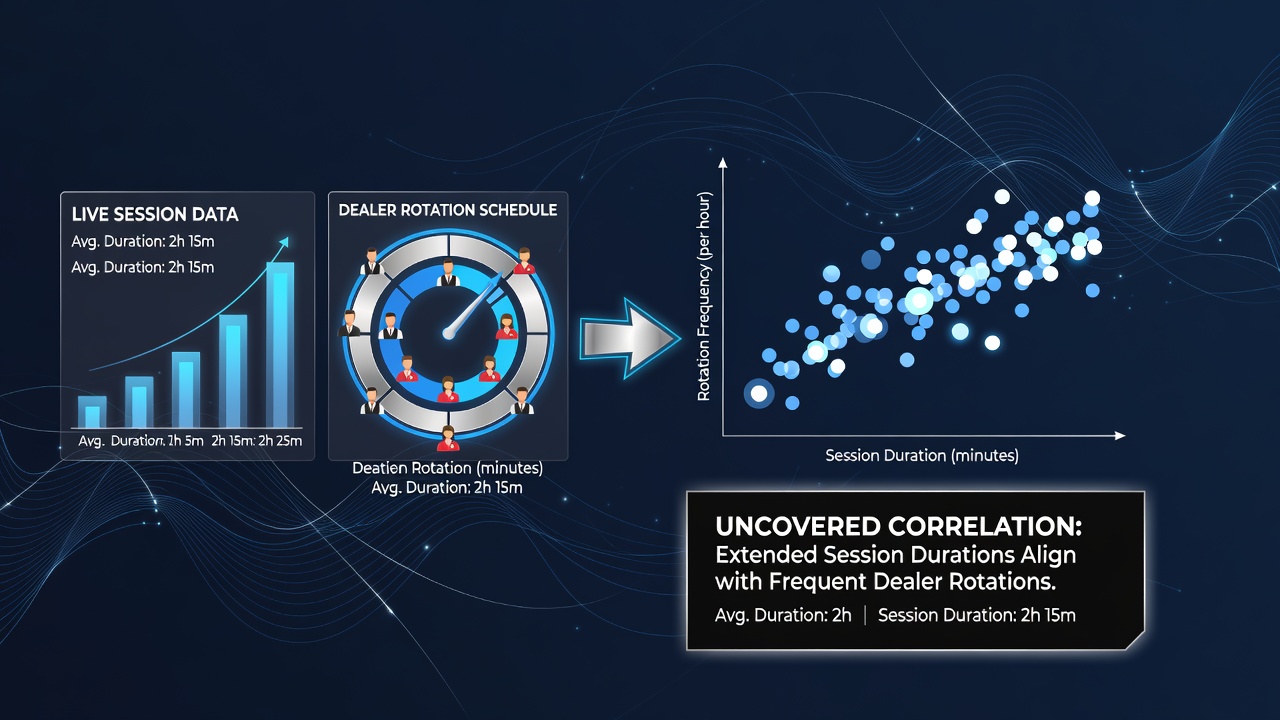
Additional examination of European casino groups operating in Spain and Portugal produced comparable results, though the magnitude of the effect varied by game. Roulette sessions showed the strongest link between rotation interval and duration, while baccarat sessions displayed a milder but still statistically detectable relationship. Blackjack fell between the two, with session extensions averaging 9 minutes when rotations moved from 30 to 45 minutes.
Regional Variations and Operational Adjustments
Regulatory filings submitted to the Nevada Gaming Control Board through mid-2026 document that several properties adjusted rotation policies after internal reviews identified the session-length correlation, and similar adjustments appeared in reports from the Macau Gaming Inspection and Coordination Bureau during the same period. Venues that lengthened rotation intervals reported modest increases in total table hours played, yet they also noted higher labor scheduling complexity because dealers required more frequent breaks outside the rotation cycle.
Observers note that the correlation weakens during late-night hours when overall player volume drops, and data from October 2026 show the effect size shrinking by nearly half between 2 a.m. and 6 a.m. compared with peak evening periods. This temporal variation suggests that crowd density and table availability interact with rotation timing to shape session behavior.
Further Patterns in Session Exit Timing
Exit clustering appears most pronounced when dealers rotate at exact 30-minute marks that align with clock times ending in :00 or :30, and records indicate players leave in greater numbers during those windows than during rotations scheduled at :15 or :45. The pattern holds across multiple jurisdictions and has prompted some operators to experiment with offset rotation times that avoid quarter-hour and half-hour boundaries.
Industry reports from the European Casino Association highlight that properties testing randomized rotation intervals between 35 and 50 minutes observed more uniform session-length distributions, reducing the sharp departure spikes tied to fixed schedules. These trials remain limited in scope, yet early results suggest the timing variable can be tuned to moderate session duration variance.
Conclusion
Available operational data establish a measurable relationship between dealer rotation intervals and live casino session durations, with longer intervals generally associated with extended play and synchronized changes producing more pronounced exit clusters. Regional studies from North America, Asia and Europe confirm the pattern across game types while showing that time-of-day and venue layout modify its strength. Continued collection of timestamp and shift records will allow operators and researchers to refine these observations and test whether deliberate adjustments to rotation cadence produce consistent changes in session behavior.