Decoding Interface Layout Influences on Decision Timing in Digital Blackjack Sessions
Quinn Wolf · Nov 15, 2026
Decoding Interface Layout Influences on Decision Timing in Digital Blackjack Sessions
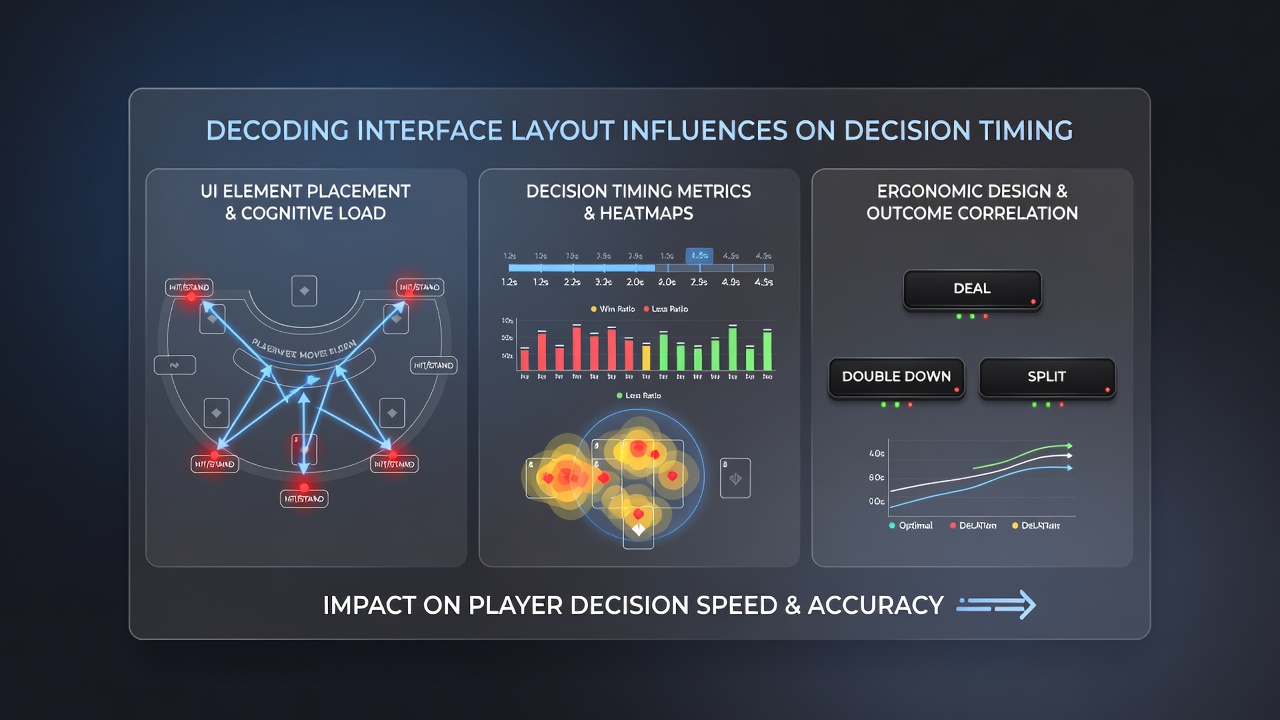
Digital blackjack platforms arrange visual elements in ways that shape how quickly participants reach decisions during each hand, and researchers have tracked these patterns through timing data collected across multiple sessions. Button placement, card display size, and information hierarchy all play measurable roles in response intervals, according to analyses from human-computer interaction studies conducted in regulated markets.
Platform developers position action buttons such as hit, stand, double, and split in consistent zones that players learn over repeated rounds, yet variations in spacing and contrast alter the time required to register and select an option. Data collected during 2025 and into November 2026 shows average decision intervals ranging from 1.8 to 3.4 seconds depending on layout density, with tighter groupings of controls correlating to shorter pauses before action.
Button Arrangement and Motor Response Patterns
Studies examining online gaming interfaces document how left-to-right versus stacked vertical button arrays affect selection speed, and one analysis from a Canadian research institute found that horizontal layouts reduced average tap times by 0.6 seconds among frequent users. Color differentiation between primary and secondary actions further narrows the window, because participants scan fewer pixels before committing to a choice.
Touch targets sized below recommended accessibility thresholds extend reaction periods, while enlarged hit and stand zones produce the opposite effect in controlled tests. Observers note that these adjustments matter most during rapid dealer reveals, when the interval between card flips leaves limited room for hesitation.
Card Display Density and Visual Processing
Layouts that cluster player and dealer cards in separate screen regions allow faster comparison of totals, whereas overlapping or animated card movements introduce brief delays as the eye tracks new information. Research published through an Australian academic consortium measured fixation durations using eye-tracking equipment and reported that clustered card arrangements cut total processing time by up to 22 percent in multi-hand sessions.
Real-time totals displayed directly beneath each hand reduce the need for mental recalculation, and platforms that update these figures instantly show lower variance in decision timing across participant groups. In contrast, interfaces requiring players to toggle between views extend the interval before an action registers.
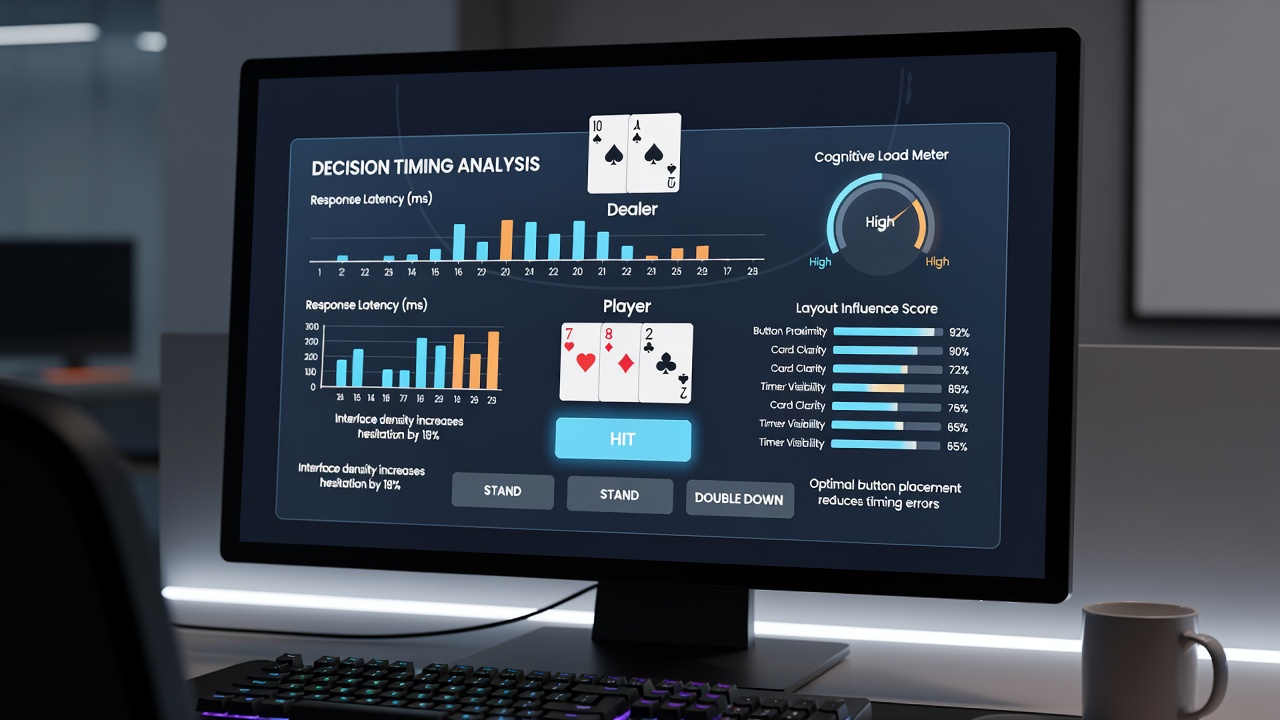
Animation speed for card draws also factors into the equation, because slower reveals give players extra moments to plan, while accelerated sequences compress the available window and increase reliance on pre-set strategies.
Information Hierarchy and Cognitive Load
Side panels that display running statistics, previous outcomes, or rule reminders compete for attention during active play, and timing logs indicate that participants using streamlined views without supplementary panels maintain steadier decision rhythms. One report from a European gaming research group documented that removal of non-essential overlays shortened average response intervals by 15 percent across a sample of several thousand hands.
Font size, contrast ratios, and the presence of live chat or balance indicators further modulate how long users pause before acting, since each additional element requires a momentary shift in focus. Platforms that prioritize core game state elements over secondary features demonstrate more consistent timing distributions in session data.
Mobile Versus Desktop Layout Differences
Screen dimensions dictate how much information fits without scrolling, and mobile interfaces often stack controls vertically to accommodate smaller viewports, which lengthens navigation paths compared with desktop grids. Figures released by the New Jersey Division of Gaming Enforcement through 2026 indicate that mobile blackjack sessions record median decision times 0.9 seconds longer than equivalent desktop sessions, even when identical rules apply.
Gesture-based controls on touch devices introduce another variable, because swipe accuracy varies with hand position and device grip, adding small but cumulative delays not present in mouse-driven environments.
Conclusion
Interface layout elements directly influence the measurable intervals between card presentation and player action in digital blackjack, and aggregated timing data across platforms reveals consistent relationships between design choices and response patterns. Button positioning, card clustering, information density, and device-specific adaptations each contribute distinct effects that operators track through session analytics. Continued refinement of these components allows platforms to align visual structures with observed decision behaviors while maintaining regulatory compliance across jurisdictions.