Global Shifts in Casino Loyalty Tiers Reveal Player Movement Trends Across International Platforms
Quinn Wolf · Aug 21, 2026
Global Shifts in Casino Loyalty Tiers Reveal Player Movement Trends Across International Platforms
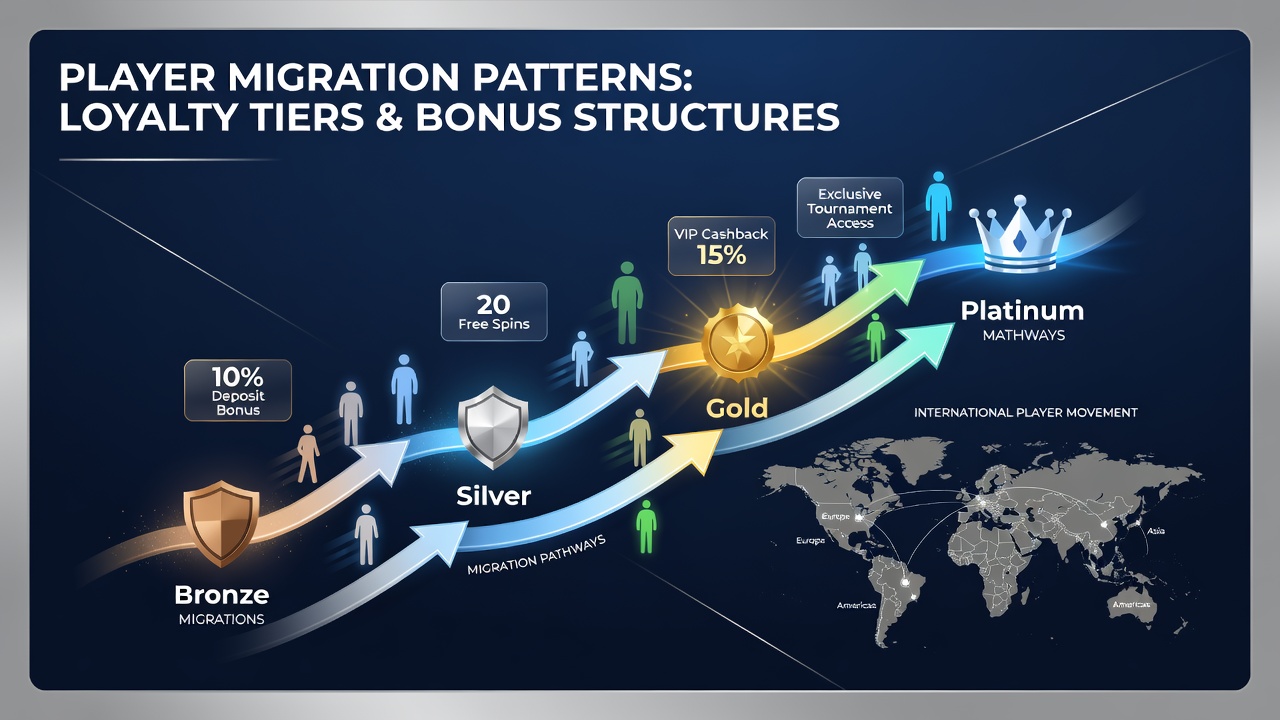
Online casinos operating with tiered bonus structures have documented consistent player migration between loyalty levels, driven by bonus thresholds, reward frequency, and regional regulatory environments. Data compiled through 2026 shows patterns where participants advance or regress across silver, gold, and platinum categories based on wagering volume, deposit consistency, and game selection preferences. These movements occur on platforms serving markets in Europe, Asia, North America, and Australia, where operators adjust tier benefits to retain high-volume users.
Tier Structures and Migration Triggers
Casinos structure loyalty tiers around cumulative play metrics, requiring specific point totals or wager amounts to unlock escalating perks such as cashback percentages, free spin allocations, and personalized account managers. Players often migrate upward when bonus multipliers align with their preferred game types, including slots with high return-to-player rates or table games offering lower house edges. Research from the University of Nevada, Las Vegas indicates that a majority of tier advancements happen after players reach 50,000 to 100,000 in cumulative wagers within a quarterly cycle, while downward shifts occur when activity drops below minimum thresholds for three consecutive months.
International operators report distinct regional variations in these patterns. European platforms see faster upward mobility among players focused on live dealer games, whereas Asian markets record higher retention in mid-tiers due to preference for progressive jackpot titles. Australian sites, regulated under different frameworks, show slower migration rates overall because bonus structures cap maximum rewards at lower tiers to comply with local advertising standards.
Data Patterns From 2025 Into August 2026
Analytics firms tracking player accounts across multiple jurisdictions found that 28 percent of loyalty members transitioned between tiers in the first half of 2026, with upward moves outnumbering downward ones by a ratio of 1.4 to 1. The surge correlates with seasonal promotions timed around major sporting events, where casinos increase point-earning rates on sports betting sections to pull users into higher brackets. Those who studied account histories note that players starting in entry-level tiers frequently reach gold status within six months when casinos offer accelerated earning events, while regression happens most often among participants whose primary activity remains limited to one game category.
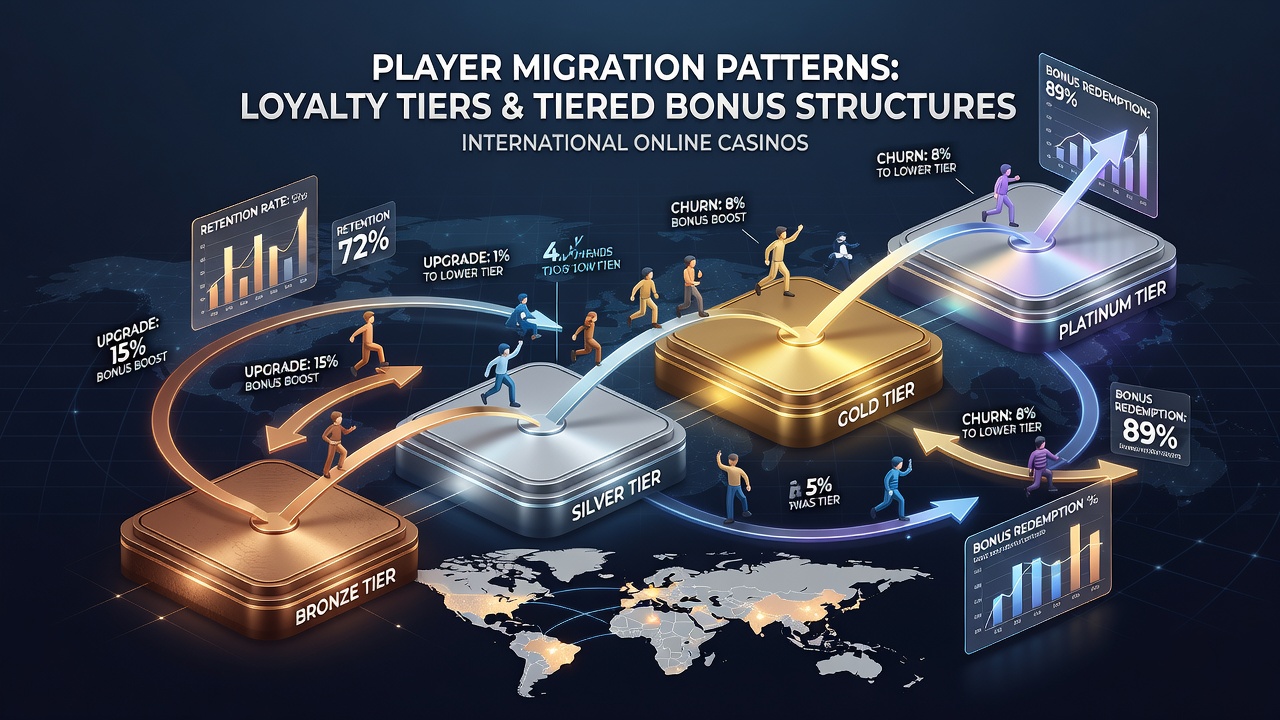
Take one operator serving Canadian and European customers simultaneously. Internal logs revealed that users who received tier-specific reload bonuses maintained activity levels 35 percent longer than those without such incentives, resulting in fewer downward migrations. Observers note similar outcomes on platforms using dynamic bonus structures that adjust rewards based on recent play history rather than static point totals. This approach reduces churn at the silver-to-gold boundary, where many accounts stabilize after the initial upgrade.
Regional Regulatory Influences on Tier Movement
Regulatory bodies outside the UK have shaped how operators design tier progression. The Nevada Gaming Control Board requires clear disclosure of all tier requirements, leading casinos to publish exact point tables that players reference when planning their activity. In contrast, the Australian Communications and Media Authority focuses on harm minimization, which has prompted some sites to introduce cooling-off periods between tier evaluations. These rules affect migration speed because players must demonstrate sustained play across multiple evaluation windows rather than single large deposits.
Industry reports from the European Gaming and Betting Association highlight that cross-border players often maintain accounts on several platforms, migrating tiers at different rates depending on each site's bonus calendar. One study revealed that participants who split activity across two or three international casinos advanced in at least one program 22 percent more frequently than single-site users, since staggered promotions allow continuous point accumulation without violating any single operator's activity caps.
Bonus Design Impact on Player Retention
Tiered bonuses that include both immediate rewards and long-term milestones encourage sustained upward movement. Casinos offering milestone bonuses at 75 percent and 90 percent of the next tier threshold see reduced stagnation at lower levels. Data indicates these intermediate incentives prompt players to extend sessions or increase deposit frequency to complete the final push. Conversely, platforms with abrupt jumps between tiers experience higher dropout rates once players calculate the additional volume required.
What's interesting is how game selection influences these calculations. Slots contribute points at varying rates depending on volatility, while table games and live dealer options often award points at fixed percentages of wager size. Players who diversify across categories reach higher tiers faster, creating observable clusters of multi-game participants in platinum brackets across major international sites.
Conclusion
Player migration across loyalty tiers at international online casinos continues to follow measurable patterns shaped by bonus mechanics, regional rules, and individual play habits. Data through August 2026 demonstrates that structured rewards tied to consistent activity produce steady advancement rates, while external factors such as sporting calendars and cross-border account usage add complexity to these movements. Operators monitoring these trends adjust tier thresholds and bonus allocations to align with observed behaviors across their global user bases.